
#ArgoCD #Automate #Azure #BBR #Bosh #cAdvisor #Carvel #ClusterAPI #Config #DevSecOps #EKS #FluxCD #GitOps #Install #KCCSS #Kube-Scan #Migrate #Monitor #NSX #Octarine #Packages #PKS #PSP #Recovery #Scale #Terraform #TKG #TKGI #TMC #Troubleshoot #Upgrade #v7K8s #Velero #vSphere
-
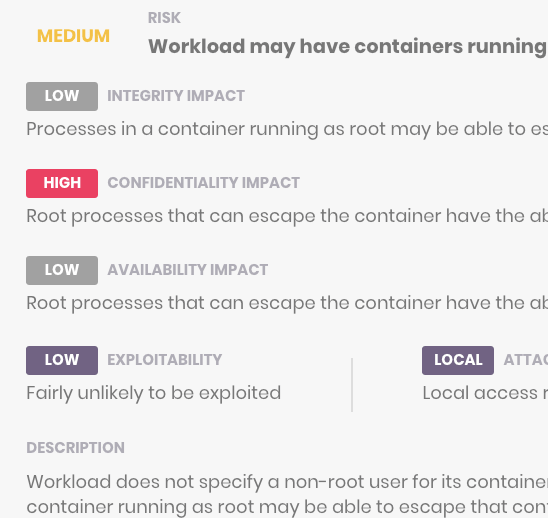
Kubernetes Risk Assessment with Octarine’s Kube-Scan
After I saw the news about VMware’s intent to acquire Octarine, I wanted to know what Octarine is all about and what solutions they have. Octarine offers intrinsic security and compliance for Containers and Kubernetes workloads from build (Octarine Guardrail) to run (Octarine Runtime). This allows organizations to adopt DevSecOps… Read more
3–4 minutes -

Backup and Migrate TKGI (PKS) to TKG with Velero
Very often, existing Disaster Recovery Solutions and processes cannot be used to backup and restore persistent applications on Kubernetes. vSphere Admins, as well as Backup Operators, are challenged with multiple layers of complexity and the need to ensure business continuity. So what can we do to ensure Disaster Recovery for… Read more
12–17 minutes -
Upgrade to VMware Enterprise PKS 1.6
Upgrading to VMware Enterprise PKS 1.6 is very easy, and the best thing is, every time you upgrade to a new Enterprise PKS version, you get a new Kubernetes version for your clusters. In this simple blog post, I want to demonstrate how to get from PKS 1.5 and Kubernetes… Read more
5–7 minutes -

Upgrade to NSX-T 2.5
NSX-T 2.5 comes with a lot of cool new features such as NSX Intelligence, Container API Support, Tier-1 Failure Domain Placement, and many more. Check out the release notes for a complete list of new features. But how to upgrade from an older version of NSX-T to 2.5? No worries,… Read more
4–6 minutes -

PKS 1.4 Pod Security Policies
Pod Security Policies are available with VMware Enterprise PKS since version 1.4 and are considered a beta state feature of Kubernetes. This is true for Kubernetes version 1.13.5, which is the version shipped with Enterprise PKS 1.4, as well as version 1.15, which is the latest release of Kubernetes as… Read more
6–9 minutes -

VMware PKS 1.3 Monitor K8s with vROPs
Monitoring is a key discipline for everyone running Kubernetes clusters in production or similar environments. VMware PKS delivers out of the box integrations for logging, application monitoring, and infrastructure monitoring to satisfy requirements of different personas working with the platform. The requirements of operations teams or Platform Reliability Engineers tend… Read more
6–9 minutes -
VMware PKS 1.3 Backup and Recovery
The new Backup and Recovery capabilities of VMware PKS 1.3 immediately caught my attention. Disaster Recovery is a very important topic for all customers running Kubernetes clusters in production or similar environments. Besides backing up the PKS control plane, PKS 1.3 has the capability to backup and restore single master… Read more
12–17 minutes -
VMware PKS 1.3 Scale K8s Clusters
Since the release of VMware PKS 1.3, we can scale up and down Kubernetes clusters. Scaling up was possible since the first PKS release, but scaling down is a new capability of PKS 1.3. This feature gives Platform Reliability Engineers the necessary elasticity and flexibility to manage infrastructure capacity of… Read more
6–9 minutes -
VMware PKS 1.3 What’s New
VMware PKS 1.3 has just been released and it contains plenty of new features and functionalities. In this post, I would like to describe and highlight some of the new capabilities. PKS 1.3 is now GA and lets you:✅ Run #Kubernetes on _any_ infrastructure✅ Backup and recover Kubernetes clusters✅ More… Read more
4–5 minutes -
VMware PKS 1.3 Upgrade
In this post, I want to describe and demonstrate the upgrade process for PKS 1.3. If you want to learn more about the new features and capabilities of PKS 1.3, please have a look at my VMware PKS 1.3 What’s New blog post. First of all, we need to download… Read more
4–7 minutes
 beyond elastic